
In this page you will find our publications (peer reviewed and archived), organized by date. We aim to make them all open access, but if you cannot access a publication please send an email to: maxime.vanderheijden@uwaterloo.ca.
2026

(14) Preprint – M. van der Heijden, M. Barzegari, J. Aarts, B. Liu, A. Forner-Cuenca
Enhancing Mass Transport in Redox Flow Batteries with 3D-Printed Triply Periodic Minimal Surface Electrode Structures
SSRN Preprint (2026)
Abstract
Triply periodic minimal surface (TPMS) structures offer a compelling route for designing porous electrodes with tunable architectures for electrochemical applications such as redox flow batteries. In this study, we fabricated carbonaceous TPMS electrodes, including gyroid, diamond, IWP, and cubic geometries, using digital light processing, and evaluated their performance in single-electrolyte flow cells using an organic redox couple. The printing process and subsequent thermal treatment produced conductive porous electrodes that closely replicated the intended TPMS geometries, preserving the characteristic features of each design. Through a detailed analysis of pressure drop, surface area, and electrochemical behavior, we identified the diamond design as particularly effective in enhancing mass transport while maintaining low hydraulic resistance. We further assessed gyroid structures, selected for being the most well-known among TPMSs, across a range of porosities, finding that higher porosity improved flow performance despite a reduction in surface area, an advantageous trade-off for electrolytes with facile kinetics and low ionic conductivity. Comparison with a commercial carbon felt electrode revealed comparable ohmic resistance and favorable flow characteristics, though reduced electrochemical surface area limited the achievable current densities. A proof-of-concept full-cell test using a vanadium redox couple demonstrated the feasibility of printed electrodes, achieving a voltage efficiency of 76% at a current density of 50 mA cm-2. These findings demonstrate the potential of architected 3D printed electrodes for future redox flow batteries and highlight the importance of tuning geometry and porosity to balance power output, mass transport, and system-level pumping losses.
2025
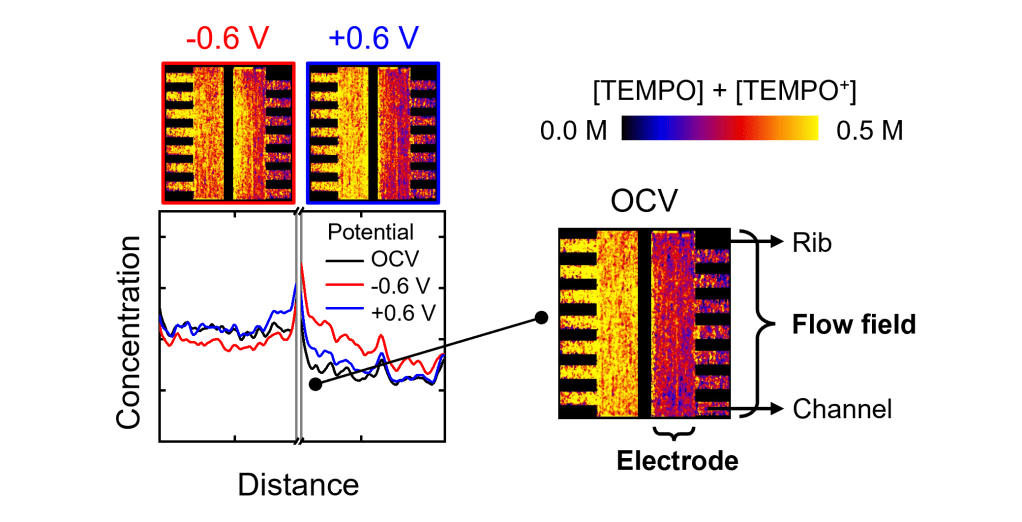
(13) M. van der Heijden, R.R. Jacquemond, E.B. Boz, P. Boillat, A. Forner-Cuenca
Neutron imaging to study the influence of flow fields and porous electrodes on concentration distributions in redox flow cells
Sustainable Energy & Fuels (2025), 9, 5278-5289
Abstract
Understanding reactive mass transport in redox flow reactors is key to improving performance, yet conventional characterization techniques often rely on cell-averaged metrics and fail to resolve local transport phenomena. In this study, we employ operando neutron radiography to visualize concentration distributions in redox flow cells with non-aqueous electrolytes, leveraging the high attenuation of hydrogen-containing organic molecules and boron-containing supporting ions. Symmetric flow cell experiments were conducted with three electrode types (paper, cloth, and a hierarchical porous electrode fabricated via non-solvent induced phase separation), and two flow field designs (parallel and interdigitated). We find that for kinetically facile electrolytes with low ionic conductivity and with parallel flow fields, electrodes with large pores in the though-plane direction (i.e., carbon cloth) augment the current output. Additionally, interdigitated flow fields sustain higher currents than parallel flow fields at a fixed potential and flow rate due to enhanced convective transport. Despite significant differences in macroscopic performance among the studied materials, the concentration profiles within the cell showed only minor variations within the studied operating conditions and imaging configuration. The cloth electrode and interdigitated flow field exhibited slightly more uniform concentration profiles across the electrode thickness compared to the paper electrode with the parallel flow field. In contrast, the phase-separation electrode displayed more steep concentration profiles and a stronger dependency on polarity reversal. Neutron radiography further uncovered critical secondary effects, including salt precipitation and flow field underutilization. These findings highlight the potential of operando imaging to inform the design and operation of electrochemical reactors for a range of technologies.
2024
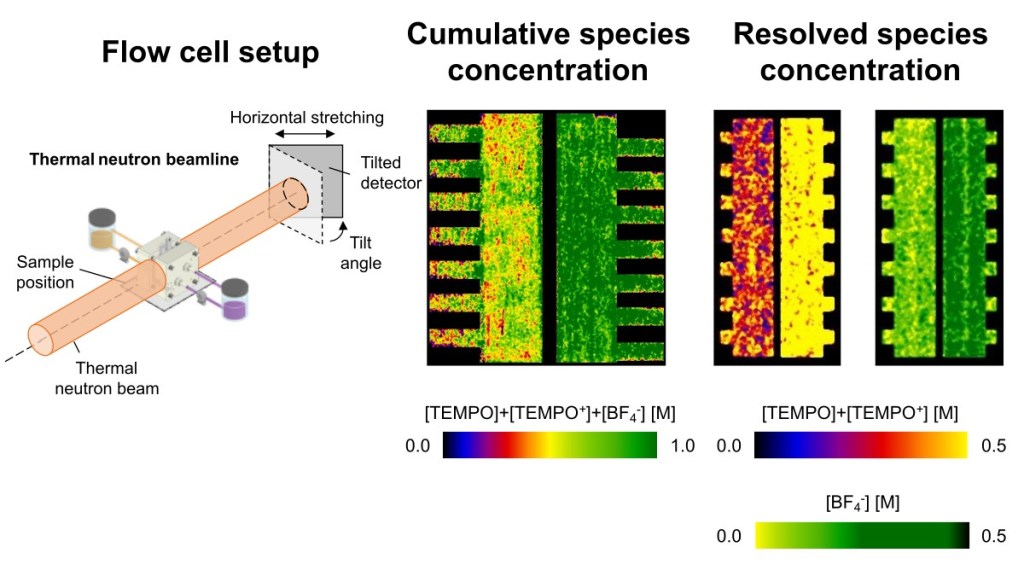
(12) R.R. Jacquemond & M. van der Heijden & E.B. Boz, E.R.C. Ruiz, K.V. Greco, J.A. Kowalski, V. Muñoz Perales, F.R. Brushett, D.C. Nijmeijer, P. Boillat, A. Forner-Cuenca
Quantifying concentration distributions in redox flow batteries with neutron radiography
Nature Communications (2024), 15, 7434
Abstract
The continued advancement of electrochemical technologies requires an increasingly detailed understanding of the microscopic processes that control their performance, inspiring the development of new multi-modal diagnostic techniques. Here, we introduce a neutron imaging approach to enable the quantification of spatial and temporal variations in species concentrations within an operating redox flow cell. Specifically, we leverage the high attenuation of redox-active organic materials (high hydrogen content) and supporting electrolytes (boron-containing) in solution and perform subtractive neutron imaging of active species and supporting electrolyte. To resolve the concentration profiles across the electrodes, we employ an in-plane imaging configuration and correlate the concentration profiles to cell performance with polarization experiments under different operating conditions. Finally, we use time-of-flight neutron imaging to deconvolute concentrations of active species and supporting electrolyte during operation. Using this approach, we evaluate the influence of cell polarity, voltage bias and flow rate on the concentration distribution within the flow cell and correlate these with the macroscopic performance, thus obtaining an unprecedented level of insight into reactive mass transport. Ultimately, this diagnostic technique can be applied to a range of (electro)chemical technologies and may accelerate the development of new materials and reactor designs.
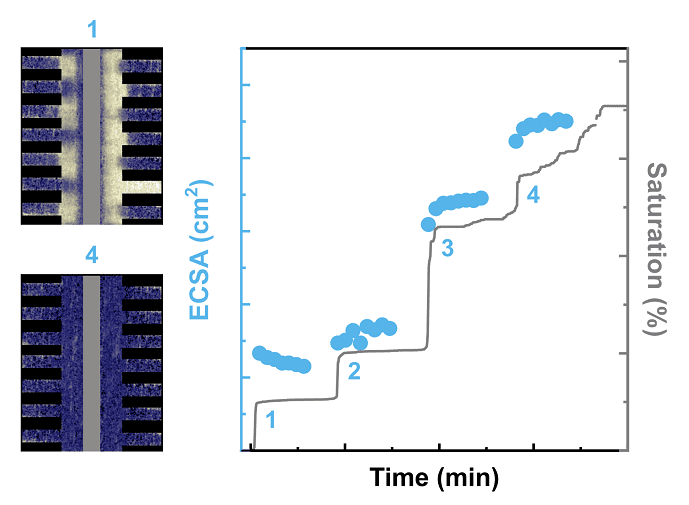
(11) E.B. Boz, M. van der Heijden, R.R. Jacquemond, P. Boillat, J. Hjelm, A. Forner-Cuenca
Correlating electrolyte infiltration with accessible surface area in microporous electrodes using neutron radiography
Journal of the Electrochemical Society (2024), 171, 053509
Abstract
Carbon-based porous electrodes are commonly employed in electrochemical technologies as they provide a high surface area for reactions, an open structure for fluid transport, and enable compact reactor architectures. In electrochemical cells that sustain liquid electrolytes (e.g., redox flow batteries, CO2 electrolyzers, capacitive deionization), the nature of the interaction between the three phases – solid, liquid and gas – determines the accessible surface area for reactions, which fundamentally determines device performance. Thus, it is critical to understand the correlation between the electrolyte infiltration in the porous electrode and the resulting accessible surface area in realistic reactor architectures. To tackle this question, here we simultaneously perform neutron radiography with electrochemical measurements to correlate macroscopic electrode saturation/wetting with accessible surface area. We find that for untreated electrodes featuring neutral wettability with water, the electrode area remains underutilized even at elevated flow rates, both for interdigitated and parallel flow fields. Conversely, increasing the electrode hydrophilicity results in an order-of-magnitude increase in accessible surface area at comparable electrode saturation, and is less influenced by the electrolyte flow rate. Ultimately, we reveal useful correlations between reactor architectures and electrode utilization and provide a method that is broadly applicable to flow electrochemical reactors.
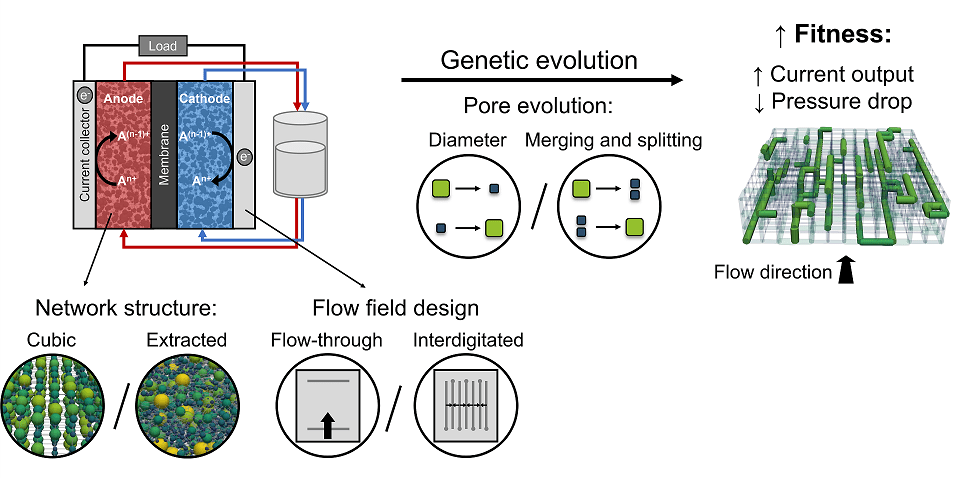
(10) M. van der Heijden, G. Szendrei, V. de Haas, A. Forner-Cuenca
A versatile optimization framework for porous electrode design
Digital Discovery (2024), 3, 1292-1307
Abstract
Porous electrodes are performance-defining components in electrochemical devices, such as redox flow batteries, as they govern the electrochemical performance and pumping demands of the reactor. Yet, conventional porous electrodes used in redox flow batteries are not tailored to sustain convection-enhanced electrochemical reactions. Thus, there is a need for electrode optimization to enhance the system performance. In this work, we present an optimization framework to carry out the bottom-up design of porous electrodes by coupling a genetic algorithm with a pore network modeling framework. We introduce geometrical versatility by adding a pore merging and splitting function, study the impact of various optimization parameters, geometrical definitions, and objective functions, and incorporate conventional electrode and flow field designs. Moreover, we show the need for optimizing geometries for specific reactor architectures and operating conditions to design next-generation electrodes, by analyzing the genetic algorithm optimization for initial starting geometries with diverse morphologies (cubic and a tomography-extracted commercial electrode), flow field designs (flow-through and interdigitated), and redox chemistries (VO2+/VO2+ and TEMPO/TEMPO+). We found that for kinetically sluggish electrolytes with high ionic conductivity, electrodes with numerous small pores and high internal surface area provide enhanced performance, whereas for kinetically facile electrolytes with low ionic conductivity, low through-plane tortuosity and high hydraulic conductance are desired. The computational tool developed in this work can further expanded to the design of high-performance electrode materials for a broad range of operating conditions, electrolyte chemistries, reactor designs, and electrochemical technologies.
2023
(Dissertation) M. van der Heijden
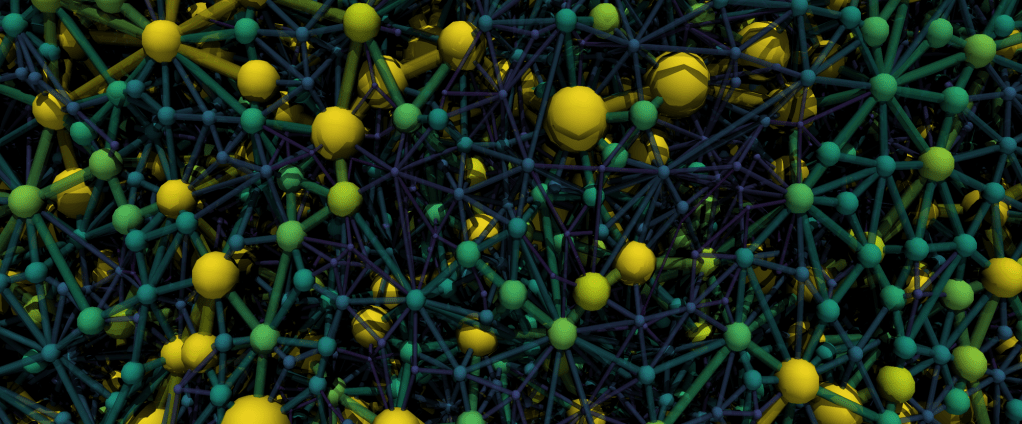
Engineering Porous Electrodes for Redox Flow Batteries – Modeling, Diagnostics, and Manufacturing
Eindhoven University of Technology (2023)
Abstract
Advanced electrochemical systems, such as redox flow batteries, rely on porous electrodes, which determine the system performance and costs. Conventional porous electrodes currently used in convection-enhanced technologies are fibrous carbonaceous materials developed for low-temperature fuel cells; as such, their microstructure and surface chemistry are not suited for redox flow batteries. Thus, there is a need for targeted synthesis and engineering of porous electrodes with tailored properties to meet the requirements of liquid-phase electrochemistry. Specifically, the three-dimensional structure of the electrode is critical as it determines the available surface area for electrochemical reactions, electrolyte transport, fluid pressure drop, and electronic and thermal conductivity. However, the role of the electrode microstructure and, consequently, the optimal design for specific flow battery chemistries remains unknown. Hence, a multi-variable optimization problem at different length scales must be solved with highly coupled transport phenomena and kinetics. In this doctoral dissertation, a novel framework is developed to design and synthesize electrode structures from the bottom up, tailored to emerging electrochemical technologies with a focus on redox flow batteries. In this thesis, fundamental structure-function-performance relationships are elucidated by imaging and modeling commercial electrodes, which are used to design hierarchically organized porous electrodes through topology optimization and to manufacture model grid structures with 3D printing.
In Chapter 1, redox flow batteries are introduced as a technology that is promising for large-scale energy storage to bridge the temporal and geographical gaps between energy demand and supply. Thereafter, the transport phenomena and cell overpotentials in redox flow batteries are discussed in detail. Furthermore, experimental diagnostics, electrode manufacturing, multiphysics simulations, and computational electrode optimization strategies are introduced to aid the theoretical understanding and design of advanced electrode structures, as the empirical design process alone is time- and resource-intensive, limiting exploration of the wider design space. Finally, the scope of the doctoral dissertation is presented based on four objectives.
In Chapter 2, the developed pore network model is explained, which is a simulation framework for flow batteries that is microstructure-informed and electrolyte-agnostic, constructed using an open-access platform (OpenPNM), and validated with experimental data. The model utilizes a network-in-series approach to account for species depletion over the entire length of the electrode, enabling the simulation of large electrode sizes. To validate the robustness of the modeling framework, single-electrolyte flow cell experiments were performed for two distinct electrolytes – aqueous and non-aqueous – and two types of porous electrodes – carbon paper and -cloth, extracted using X-ray computed tomography and converted into a pore network. The electrochemical model solves the electrolyte fluid transport and couples both half-cells by iteratively solving the species and charge transport at a low computational cost. The electrochemical performance of the non-aqueous electrolyte is well captured by the model without fitting parameters, allowing rapid benchmarking of porous electrode microstructures. For the aqueous electrolyte, it is found that incomplete wetting of the electrode results in overprediction of the electrochemical performance. Finally, a parametric sweep is discussed for the identification of operation envelopes.
In Chapter 3, the pore network model of Chapter 2 is used, together with experimental techniques, to investigate the effect of stacking electrode layers for two prevailing commercial electrodes and flow fields. To this end, the pore network model is extended to simulate an interdigitated flow field design, and thickness-structure-performance relationships are obtained for specific electrode-flow field configurations. By stacking commercial electrodes, for example, two carbon paper electrodes with a flow-through configuration, the overall reactor efficiency can be enhanced. Furthermore, both the electrochemical power and pressure drop are improved, providing a facile strategy to enhance the performance of flow batteries.
In Chapters 4 and 5, a genetic algorithm is developed and coupled with the pore network model of Chapter 2 for the bottom-up design of electrode structures. Using this approach, the electrode microstructure evolves driven by a fitness function that minimizes the pumping power and maximizes the electrochemical power, requiring only the electrolyte chemistry, initial electrode morphology, and flow field geometry as inputs. Thus, making it a versatile framework that can be applied to other electrochemical systems. In Chapter 4, the principle of the genetic algorithm is introduced, where a flow-through cubic lattice structure with fixed pore positions is analyzed and shows significant improvement in the fitness function over 1000 generations. The evolution results in a structure with a bimodal pore size distribution containing longitudinal electrolyte flow pathways of large pores, significantly reducing the pumping requirements. Additionally, an increase in surface area at the membrane-electrode interface is found, resulting in an enhancement of the electrochemical performance.
In Chapter 5, the genetic algorithm is extended to allow for more evolutionary freedom during the optimization process by evolving structures beyond fixed flow-through cubic lattice designs. To this end, pore merging and splitting are incorporated to allow larger geometrical flexibility. In addition, the optimization of complex structures is investigated by the implementation of Voronoi networks and X-ray tomography extracted off-the-shelf fibrous electrodes as starting networks. Subsequently, the effect of operational conditions is analyzed by evaluating two chemistries and two prevailing flow field geometries. Furthermore, optimization definitions (fitness function and geometrical definitions) are elaborated upon to inform about their importance and to show the flexibility of the algorithm.
In Chapter 6, a new neutron radiography approach is introduced to quantify concentration distributions in operando redox flow cells, providing a new diagnostic tool to better understand reactive transport phenomena in electrochemical reactors. The presented approach is developed for a non-aqueous model redox system where the attenuation comes from the hydrogen or boron atoms that compose redox active molecules or supporting ions in non-aqueous electrolytes. Concentration profiles are resolved across the electrode thickness by employing in-plane imaging and are correlated to the cell performance with polarization measurements under various operating conditions. Two neutron imaging methods are used, where first the combined attenuation of the active species and supporting salt is examined over the electrode thickness. Thereafter, a time-of-flight neutron imaging approach is used to analyze deconvoluted active species and supporting ion transport over time. With this approach, the transport of species in the reactor under a voltage bias is revealed, gaining insights into reactive transport phenomena within an operating flow cell.
In Chapter 7, the neutron radiography approach of Chapter 6 is utilized to study local transport properties and concentration distributions in the porous electrode for three distinct electrode structures and with two flow field designs. By tracking the cumulative active species movement, it is found that, for electrolytes with facile kinetics and low ionic conductivity, an electrode structure with a bimodal pore size distribution with large through-plane voids is favorable combined with parallel flow fields because of the high through-plane hydraulic conductance and effective diffusivity, enhancing the current output. Comparably, interdigitated flow fields feature higher reaction rates and current output compared to parallel designs because of forced convection. Moreover, neutron radiography is proven useful in the detection of system secondary phenomena including salt precipitation and underutilization of flow field channels.
In Chapter 8, the manufacturing of porous electrodes using 3D printing is presented. Model grid structures were manufactured with stereolithography followed by carbonization to tune the physicochemical properties of electrodes. A suite of microscopy, tomography, spectroscopy, fluid dynamics, and electrochemical diagnostics was employed to evaluate the thermal behavior, manufacturing fidelity, and fluid and mass transport performance of ordered lattice structures in non-aqueous redox flow cells. The influence of the pillar geometry, printing orientation regarding the printing platform, and flow field design on the electrode performance is investigated. It is found that although commercial electrodes feature a greater internal surface area and therefore better performance, the area-normalized mass transfer coefficient is improved and the pressure drop is reduced by utilizing 3D-printed electrodes.
Finally, the main findings of this work are summarized in Chapter 9, and future research directions to accelerate and broaden the design and fabrication processes of advanced electrode structures are provided.

(9) V. Muñoz Perales & M. van der Heijden, V. de Haas, J. Olinga, M. Vera, A. Forner-Cuenca
Understanding the Role of Electrode Thickness on Redox Flow Cell Performance
ChemElectroChem (2023), 11, 2, e202300380
Abstract
The electrode thickness is a critical design parameter to engineer high performance redox flow cells by impacting the available surface area for reactions, current and potential distributions, and required pumping power. To date, redox flow cell assemblies employ repurposed off-the-shelf fibrous electrodes which feature a broad range of thicknesses. However, comprehensive guidelines to select the optimal electrode thickness for a given reactor architecture remain elusive. Here, we investigate the effect of the electrode thickness in the range of 200–1100 μm on the cell performance by stacking electrode layers in four different flow cell configurations – Freudenberg paper and ELAT cloth electrodes combined with flow-through and interdigitated flow fields. We employ a suite of polarization, electrochemical impedance spectroscopy and pressure drop measurements together with pore network modeling simulations to correlate the electrode thickness for various reactor designs to the electrochemical and hydraulic performance. We find that thicker electrodes (420 μm paper electrodes and 812 μm cloth electrodes) are beneficial in combination with flow-through flow fields, whereas when using interdigitated flow fields, thinner electrodes (210 μm paper electrodes and 406 μm cloth electrodes) result in a better current density and pressure drop trade-off. We hope our findings will aid researchers and technology practitioners in designing their electrochemical flow cells under convective operation.
(8) V. Muñoz-Perales, M. van der Heijden, P.A. Garcia-Salaberri, M.V. Coello, A. Forner-Cuenca
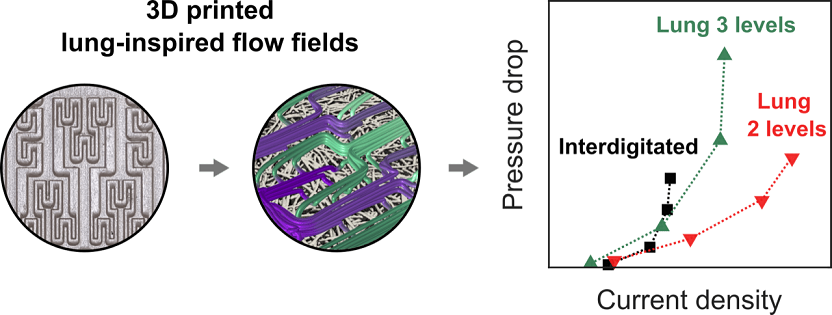
Engineering Lung-inspired Flow Field Geometries for Redox Flow Batteries with Stereolithography 3D Printing
ACS Sustainable Chemistry and Engineering (2023), 11, 12243−12255
Abstract
Electrochemical flow reactors are increasingly relevant platforms in emerging sustainable energy conversion and storage technologies. As a prominent example, redox flow batteries, a well-suited technology for large energy storage if the costs can be significantly reduced, leverage electrochemical reactors as power converting units. Within the reactor, the flow field geometry determines the electrolyte pumping power required, mass transport rates, and overall cell performance. However, current designs are inspired by fuel cell technologies but have not been engineered for redox flow battery applications, where liquid-phase electrochemistry is sustained. Here, we leverage stereolithography 3D printing to manufacture lung-inspired flow field geometries and compare their performance to conventional flow field designs. A versatile two-step process based on stereolithography 3D printing followed by a coating procedure to form a conductive structure is developed to manufacture lung-inspired flow field geometries. We employ a suite of fluid dynamics, electrochemical diagnostics, and finite element simulations to correlate the flow field geometry with performance in symmetric flow cells. We find that the lung-inspired structural pattern homogenizes the reactant distribution throughout the porous electrode and improves the electrolyte accessibility to the electrode reaction area. In addition, the results reveal that these novel flow field geometries can outperform conventional interdigitated flow field designs, as these patterns exhibit a more favorable balance of electrical and pumping power, achieving superior current densities at lower pressure loss. Although at its nascent stage, additive manufacturing offers a versatile design space for manufacturing engineered flow field geometries for advanced flow reactors in emerging electrochemical energy storage technologies.
(7) M. van der Heijden, M. Kroese, Z. Borneman, A. Forner-Cuenca
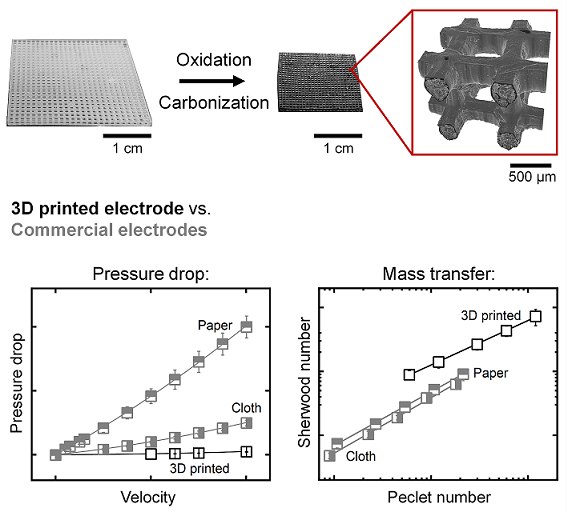
Investigating mass transfer relationships in stereolithography 3D printed electrodes for redox flow batteries
Advanced Materials Technologies (2023), 8, 18, 2300611
Abstract
Porous electrodes govern the electrochemical performance and pumping requirements in redox flow batteries, yet conventional carbon-fiber-based porous electrodes have not been tailored to sustain the requirements of liquid-phase electrochemistry. 3D printing is an effective approach to manufacturing deterministic architectures, enabling the tuning of electrochemical performance and pressure drop. In this work, model grid structures are manufactured with stereolithography 3D printing followed by carbonization and tested as flow battery electrode materials. Microscopy, tomography, spectroscopy, fluid dynamics, and electrochemical diagnostics are employed to investigate the resulting electrode properties, mass transport, and pressure drop of ordered lattice structures. The influence of the printing direction, pillar geometry, and flow field type on the cell performance is investigated and mass transfer vs. electrode structure correlations are elucidated. It is found that the printing direction impacts the electrode performance through a change in morphology, resulting in enhanced performance for diagonally printed electrodes. Furthermore, mass transfer rates within the electrode are improved by helical or triangular pillar shapes or by using interdigitated flow field designs. This study shows the potential of stereolithography 3D printing to manufacture customized electrode scaffolds, which could enable multiscale structures with superior electrochemical performance and low pumping losses.
(6) R. van Gorp & M. van der Heijden, M.A. Sadeghi, J. Gostick, A. Forner-Cuenca
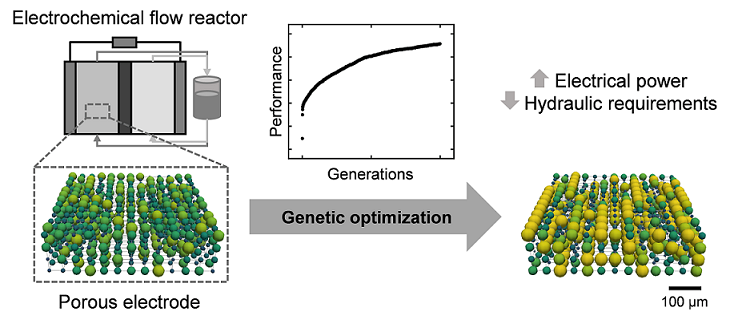
Bottom-up design of porous electrodes by combining a genetic algorithm and a pore network model
Chemical Engineering Journal (2023), 455, 139947
Abstract
The microstructure of porous electrodes determines multiple performance-defining properties, such as the available reactive surface area, mass transfer rates, and hydraulic resistance. Thus, optimizing the electrode architecture is a powerful approach to enhance the performance and cost-competitiveness of electrochemical technologies. To expand our current arsenal of electrode materials, we need to build predictive frameworks that can screen a large geometrical design space while being physically representative. Here, we present a novel approach for the optimization of porous electrode microstructures from the bottom-up that couples a genetic algorithm with a previously validated electrochemical pore network model. In this first demonstration, we focus on optimizing redox flow battery electrodes. The genetic algorithm manipulates the pore and throat size distributions of an artificially generated microstructure with fixed pore positions by selecting the best-performing networks, based on the hydraulic and electrochemical performance computed by the model. For the studied VO2+/VO2+ electrolyte, we find an increase in the fitness of 75 % compared to the initial configuration by minimizing the pumping power and maximizing the electrochemical power of the system. The algorithm generates structures with improved fluid distribution through the formation of a bimodal pore size distribution containing preferential longitudinal flow pathways, resulting in a decrease of 73 % for the required pumping power. Furthermore, the optimization yielded an 47 % increase in surface area resulting in an electrochemical performance improvement of 42 %. Our results show the potential of using genetic algorithms combined with pore network models to optimize porous electrode microstructures for a wide range of electrolyte composition and operation conditions.
2022
(5) M. van der Heijden & R. van Gorp, M.A. Sadeghi, J. Gostick, A. Forner-Cuenca
Assessing the Versatility and Robustness of Pore Network Modeling to Simulate Redox Flow Battery Electrode Performance
Journal of the Electrochemical Society (2022), 169, 4, 040505
Focus Issue on Woman in Electrochemistry.
Abstract
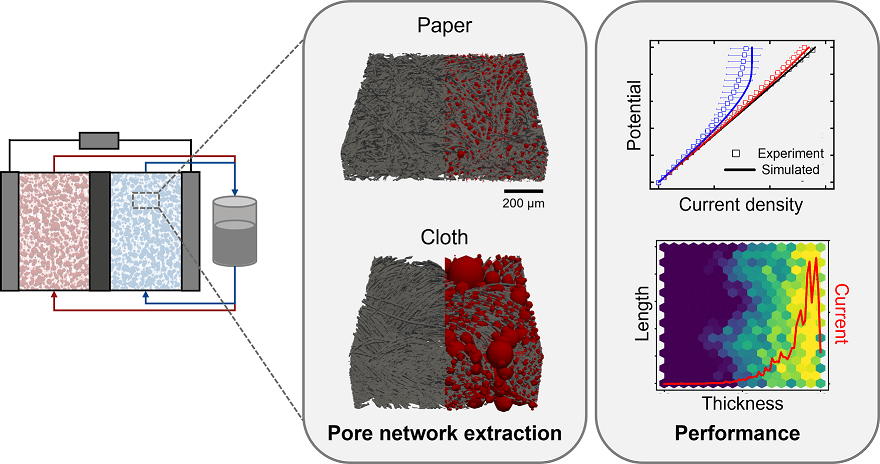
Porous electrodes are core components that determine the performance of redox flow batteries. Thus, optimizing their microstructure is a powerful approach to reduce system costs. Here we present a pore network modeling framework that is microstructure and chemistry agnostic, iteratively solves transport equations in both half-cells, and utilizes a network-in-series approach to simulate the local transport phenomena within porous electrodes at a low computational cost. In this study, we critically assess the versatility and robustness of pore network models to enable the modeling of different electrode geometries and redox chemistries. To do so, the proposed model was validated with two commonly used carbon fiber-based electrodes (a paper and a cloth), by extracting topologically equivalent networks from X-ray tomograms, and evaluated for two model redox chemistries (an aqueous iron-based and a non-aqueous TEMPO-based electrolyte). We find that the modeling framework successfully captures the experimental performance of the non-aqueous electrolyte but is less accurate for the aqueous electrolyte which was attributed to incomplete wetting of the electrode surface in the conducted experiments. Furthermore, the validation reveals that care must be taken when extracting networks from the tomogram of the woven cloth electrode, which features a multiscale microstructure with threaded fiber bundles. Employing this pore network model, we elucidate structure-performance relationships by leveraging the performance profiles and the simulated local distributions of physical properties and finally, we deploy simulations to identify efficient operation envelopes.
(4) K.M. Tenny, K.V. Greco, M. van der Heijden, T. Pini, A. Mularczyk, A. Vasile, J. Eller, A. Forner-Cuenca, Y. Chiang, F.R. Brushett
A Comparative Study of Compressive Effects on the Morphology and Performance of Carbon Paper and Cloth Electrodes in Redox Flow Batteries
Energy Technology (2022), 10, 2101162
Abstract
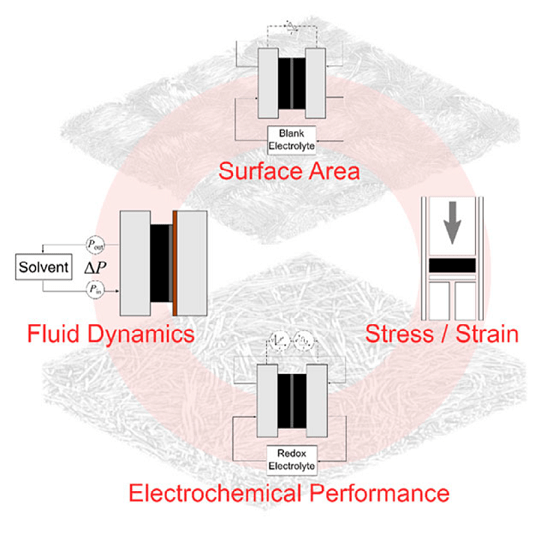
Compressing porous carbon electrodes is a common approach to improve flow battery performance, but the resulting impact on electrode structure, fluid dynamics, and cell performance is not well understood. Herein, microtomographic imaging, load cell testing, and flow cell diagnostics are employed to characterize how compression-induced changes impact pressure drop, polarization, and mass-transfer scaling. Five different compressions are tested, spanning ranges typically used in literature, for AvCarb 1071 cloth (0%, 9%, 20%, 25%, 32%) and Freudenberg H23 paper (0%, 8%, 12%, 17%, 22%). It is found that the two electrode structures have distinct responses to compression, resulting in differing optimal conditions identified for each material; specifically, the Freudenberg H23 exhibits lower combined ohmic, charge-transfer, and mass-transport values at 8% compression, resulting in improved electrochemical performance across all compressive values, as compared to the optimal AvCarb 1071 compression (20%). Overall, Freudenberg H23 exhibits a greater sensitivity to compression with peak electrochemical activity correlating with increased permeability, whereas AvCarb 1071 is insensitive to compressive loads but produces lower electrochemical performance. Herein, the trade-offs of mechanical robustness on fluid-dynamic and electrochemical performance between the two electrodes are demonstrated by the aforementioned findings, suggesting each could be used for specific operating environments.
(3) M. van der Heijden, A. Forner-Cuenca
Transport Phenomena and Cell Overpotentials in Redox Flow Batteries
In: Luisa F. Cabeza (eds.), Encyclopedia of Energy Storage; Oxford: Elsevier (2022), 2, 480-499.
Abstract
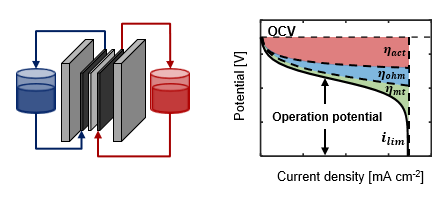
Redox flow batteries are a promising technological option for large-scale energy storage, but their deployment is hampered by suboptimal performance and elevated costs. The reactor performance is determined by the mass, charge, momentum, and heat transport rates coupled with electrochemical reactions. Understanding, measuring, and simulating these metrics is thus necessary for device optimization. In this chapter, we first describe the main transport mechanisms and cell overpotentials relevant to flow batteries with a focus on single cells representative of individual units in a stack. Then, we critically review some experimental methods, including bulk and locally resolved diagnostics, which enable determination of cell overpotentials. Finally, we briefly describe the most promising modeling approaches. Our goal is to provide students and scientists with the fundamental guiding principles of transport phenomena and cell overpotentials that can be leveraged to design advanced materials and reactor architectures with enhanced performance.
2020
(2) G. Timmermans, M. van der Heijden, B.M. Oosterlaken, S.C.J. Meskers, A.P.H.J. Schenning, M.G. Debije
Flexible Nanoporous Liquid Crystal Networks as Matrixes for Förster Resonance Energy Transfer (FRET)
ACS Applied Nano Materials (2020), 3, 4, 3904–3909
Abstract
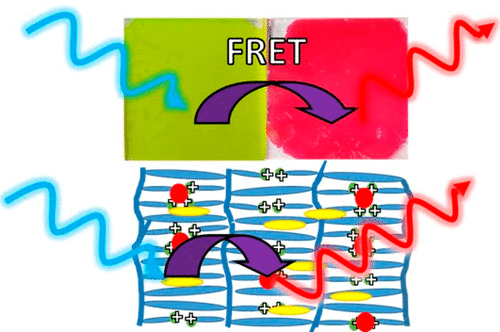
Förster resonance energy transfer (FRET) is important, not only in the fields of biology and biophysics but also in optoelectronics and light guiding systems. Different matrixes are being investigated that facilitate FRET, including zeolites and metal–organic frameworks. In this work, a matrix for FRET generation is proposed: nanoporous liquid crystal networks. These liquid crystal networks can be easily processed and can align dichroic fluorescent dyes. A base treatment can create nanopores in the network, which are then able to absorb a second fluorescent dye in an aqueous phase while still retaining good alignment. Using lifetime measurements, we provide proof that even in this nonoptimized system, around 70% of the energy was transferred via the FRET mechanism from one dye to the other. Liquid crystal networks have many advantages over current matrixes as they are easy to fabricate as well as flexible and could be modified to selectively and reversely absorb dyes, allowing many applications.
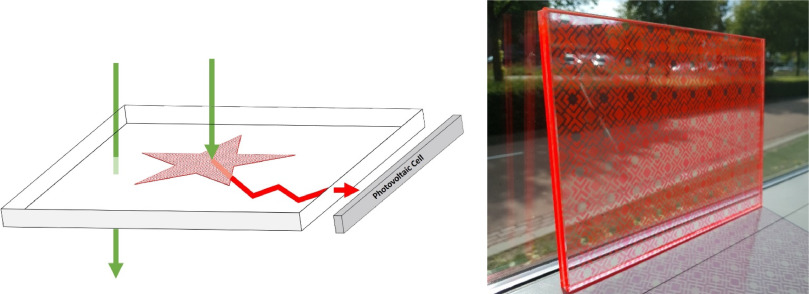
(1) J. ter Schiphorst, M.L.M.K.H.Y.K. Cheng, M. van der Heijden, R.L. Hageman, E.L. Bugg, T.J.L. Wagenaar, M.G. Debije
Printed luminescent solar concentrators: Artistic renewable energy
Energy and Buildings (2020), 207, 109625
Abstract
The built environment and its direct surroundings show great potential for sustainable energy harvesting but often face the challenge of being integrated with solar energy generators in an aesthetically pleasing manner. In this work, we demonstrate the inkjet printing of luminescent solar concentrators with striking imagery as a promising solution where energy generation and aesthetic possibilities of transparent surfaces become possible. Inkjet printing is used to create a variety of unique patterns for enhanced aesthetics, while a model study explores the effect of patterning and use of multiple colors with this technique on the output of the device.
